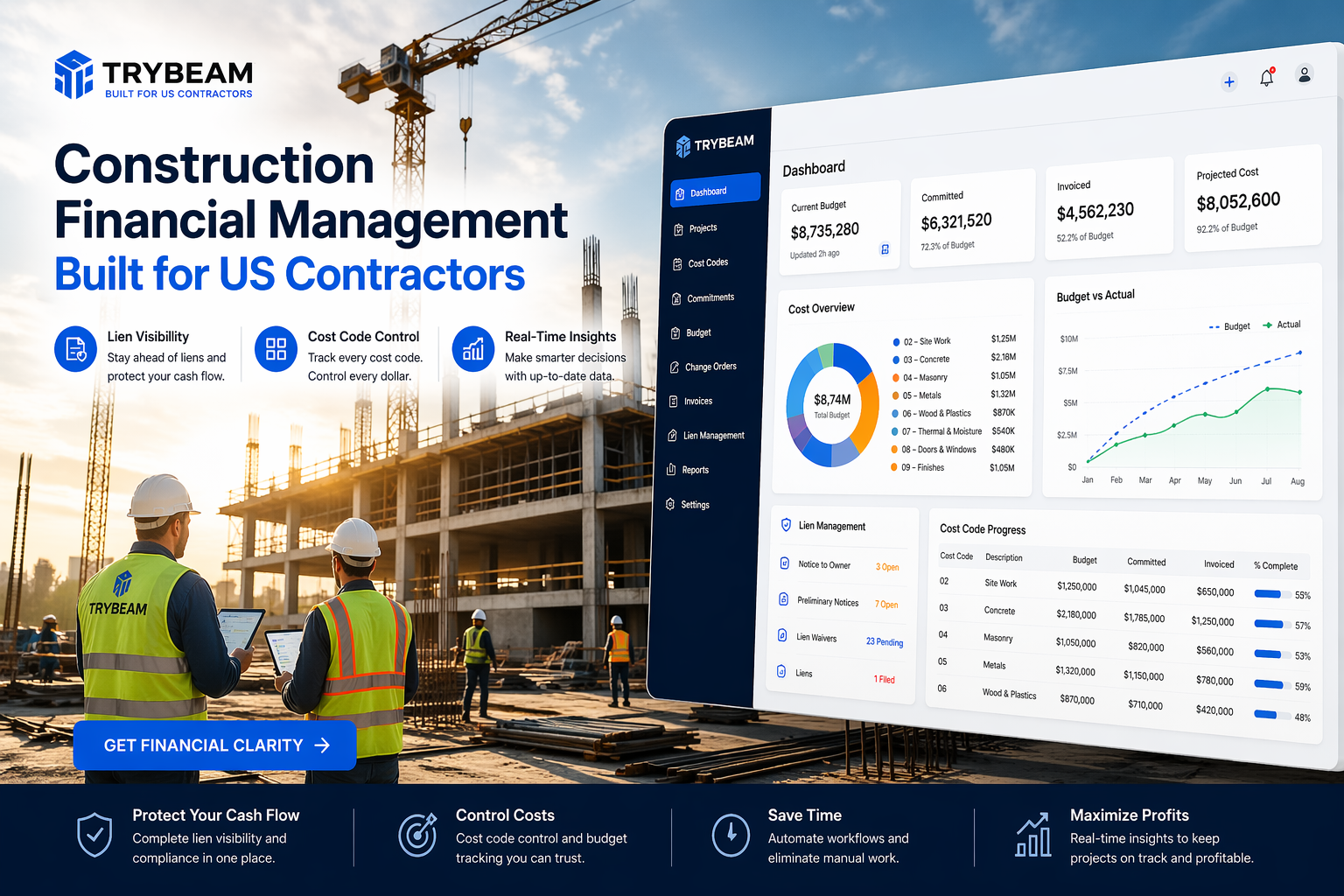
In today’s fast-paced construction industry, financial control and compliance management have become critical for contractors of all sizes. The beam company is focused on solving these challenges by providing modern tools that simplify complex financial workflows. By bringing automation into lien tracking, insurance verification, and payment compliance, contractors can reduce administrative burden and focus more on project delivery and growth. This shift toward digital financial management is transforming how construction businesses operate in a highly regulated environment.
Construction projects involve multiple stakeholders including subcontractors, suppliers, and clients, each requiring accurate documentation and timely payments. Managing compliance manually often leads to delays, errors, and potential legal risks. Contractors must track lien waivers, verify insurance certificates, and ensure every payment meets contractual requirements. Without a streamlined system, these responsibilities can quickly become overwhelming, especially for mid-sized construction firms handling multiple projects simultaneously. This is where automation-driven platforms are making a significant difference.
One of the most important areas of improvement is lien management. Traditionally, tracking lien waivers requires constant communication and document collection from subcontractors and vendors. Mistakes or missing documents can expose contractors to financial risk and disputes. With automated lien tracking systems, contractors can request, collect, and verify lien waivers in real time. This reduces delays in payment processing and ensures that all parties remain compliant with legal and contractual obligations. It also improves transparency across the entire project lifecycle, giving teams better control over financial documentation.
Insurance and payment compliance are equally critical in construction financial management. Contractors must ensure that every subcontractor has valid insurance coverage before work begins and throughout the project duration. Manual verification often leads to outdated records and increased exposure to liability risks. Automated systems continuously track insurance certificates and send alerts when renewals are needed. At the same time, payment compliance tools ensure that invoices are properly approved, matched with project milestones, and released only when all conditions are satisfied. This structured approach reduces disputes and helps maintain healthy cash flow.
The integration of these automated processes creates a more efficient and secure financial ecosystem for construction companies. Contractors gain better visibility into project finances, reduce administrative workload, and minimize the risk of compliance violations. By adopting modern solutions like those offered through platforms such as https://trybeeam.com/, construction businesses can move away from fragmented manual systems and toward centralized financial control. Ultimately, this leads to faster payments, stronger vendor relationships, and improved operational stability across projects.
As the construction industry continues to evolve, digital transformation is no longer optional—it is essential. Companies that embrace automation in lien, insurance, and payment compliance are better positioned to scale efficiently while maintaining financial accuracy. By reducing manual errors and improving workflow transparency, contractors can focus on delivering high-quality projects on time and within budget. Trybeam Construction Financial Management Software for Real‑Time Job Cost Reports
#projectcostcontrol #constructionmanagement